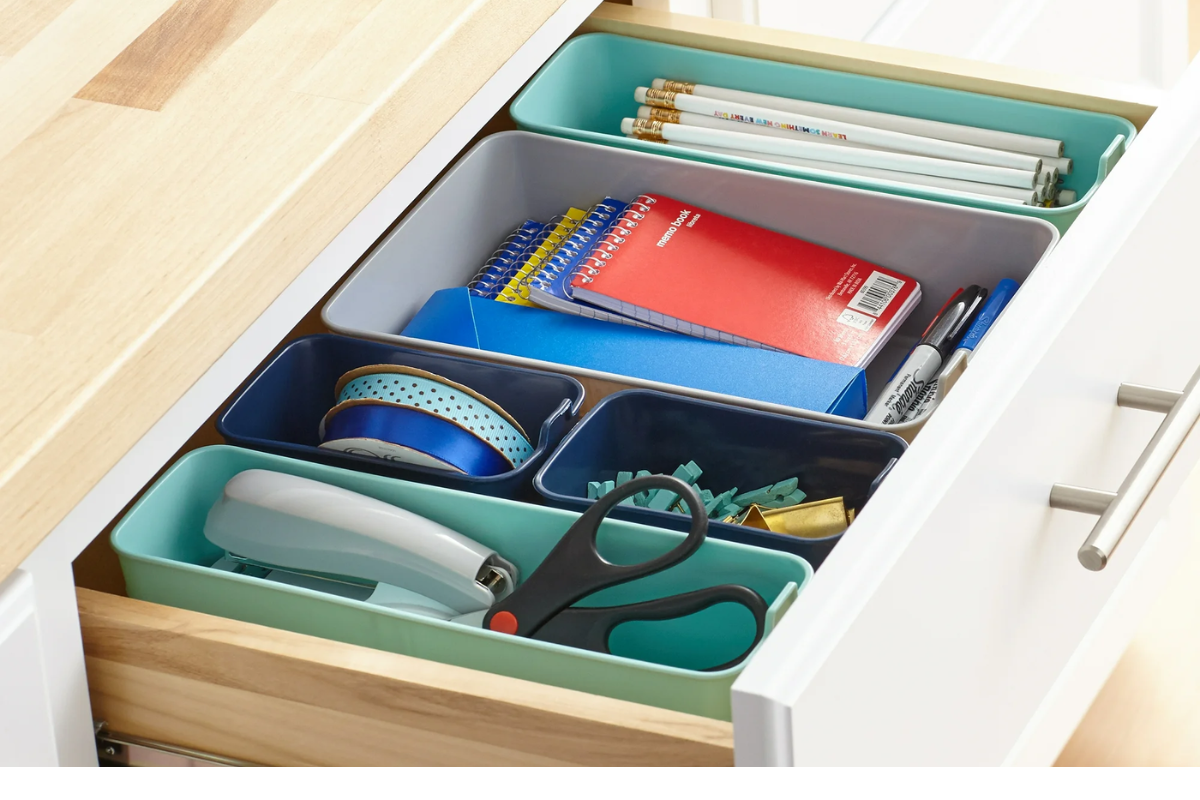
Junk Drawer Organization
Every home has one—the drawer that catches everything with no clear home. Batteries, scissors, rubber bands, mystery keys. The junk drawer isn’t a failure of organization; it’s proof that life is happening and simply needs some simple junk drawer organization.
The goal isn’t to eliminate the junk drawer. It’s to make it work for you instead of against you.
Let’s create a simple, junk drawer organization system that keeps this drawer useful without constant maintenance.
Empty It Completely (Yes, All of It)
Start by taking everything out of the drawer. This is the only time you’ll see the full picture.
As you empty it, you’ll be able to:
- Toss obvious trash
- Reclaim forgotten items
- Clean out crumbs and dust
Wipe the drawer clean before putting anything back in.
Sort Into Honest Categories
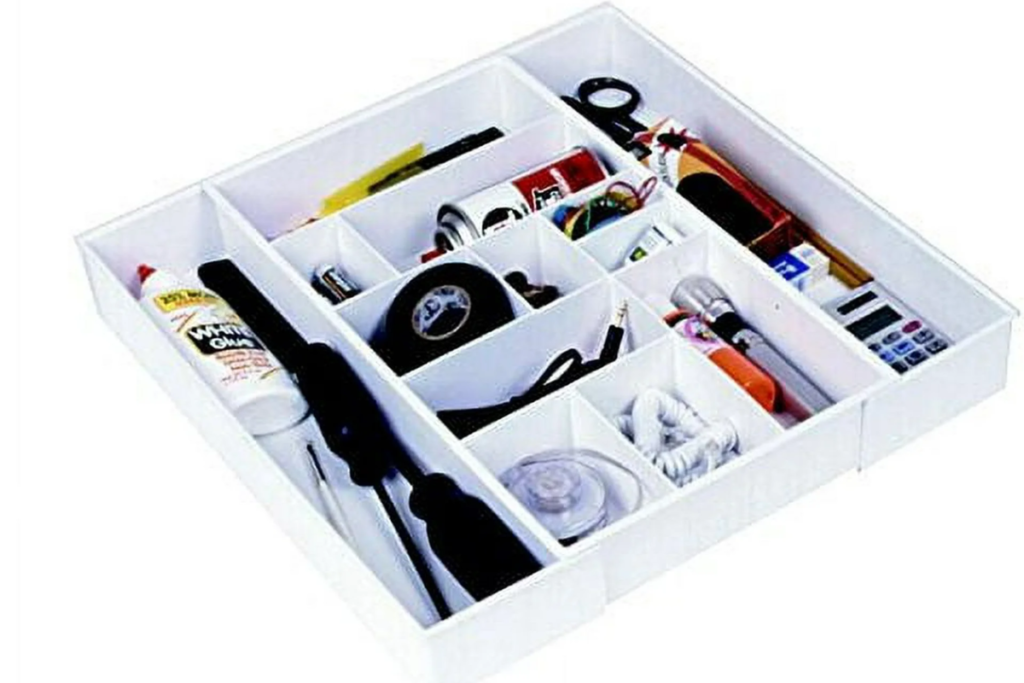
Lay everything out and create loose groupings. Common junk drawer categories include:
- Writing tools
- Batteries
- Small tools (screwdrivers, measuring tape)
- Cords and electronics
- Paper items (coupons, manuals, notes)
- Miscellaneous odds and ends
Junk drawer organization isn’t about perfection—just clarity.
Junk Drawer Organization Questions
Ask yourself:
- Is this broken?
- Do I know what this is?
- Have I used this in the last year?
If an item creates confusion instead of usefulness, it doesn’t belong here. Keeping fewer items makes the drawer easier to maintain.
Use Simple Dividers (Nothing Fancy Required)
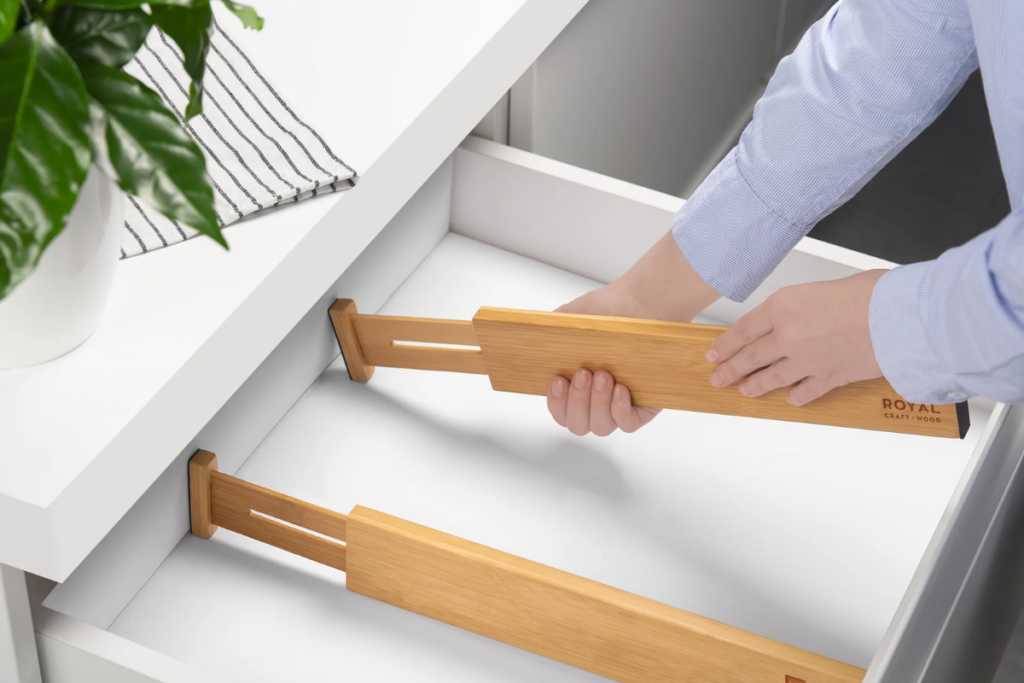
The junk drawer works best with clear boundaries.
Use:
- Adjustable drawer dividers
- Small bins or trays
- Repurposed boxes or containers
Each category should have its own space—even if that space is small.
Assign a “Catch-All” Zone
Instead of fighting the urge to toss random items into the drawer, plan for it.
Create one small section labeled (mentally or literally) “miscellaneous.” This gives new or temporary items a place to land without disrupting the rest of the system.
Place Everyday Items Front and Center
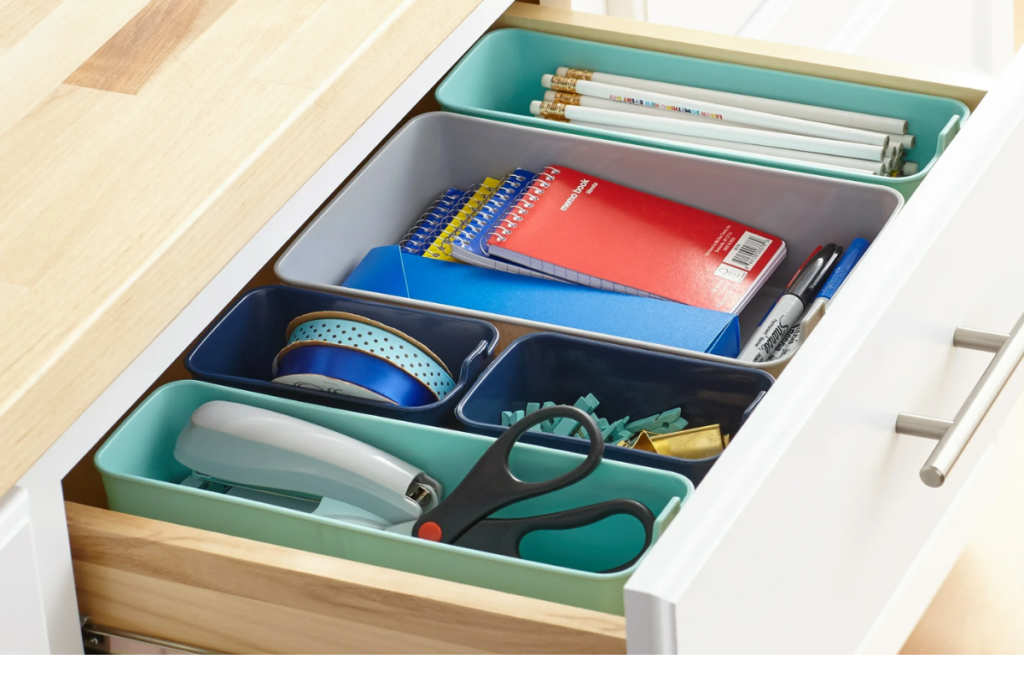
Think about what you reach for most often—scissors, pens, batteries—and give those items the most accessible spots.
Less-used items can live toward the back or side of the drawer.
Set Gentle Rules for the Drawer
A few simple guidelines help this system last:
- No trash goes back into the drawer
- Paper gets reviewed monthly
- Batteries stay in one container
These small boundaries prevent clutter from quietly building again.
Reset as Needed (Not Constantly)
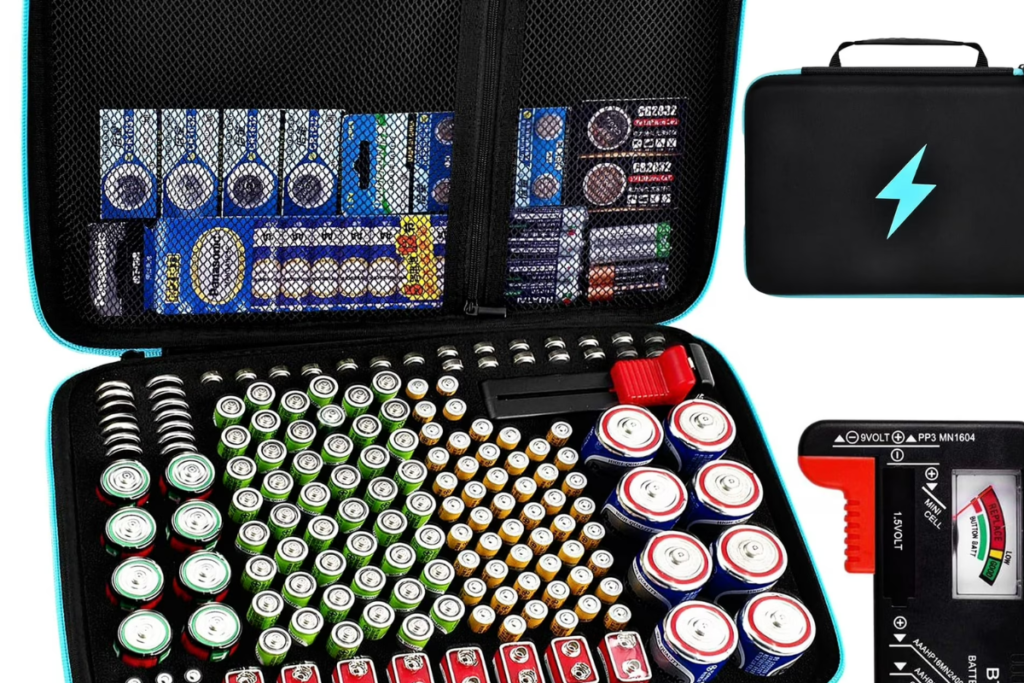
The junk drawer doesn’t need weekly attention. A quick reset every few months is more than enough for your junk drawer organization:
- Remove items that no longer belong
- Realign bins
- Toss what’s expired or broken
Think maintenance, not perfection.
A Final Thought
The junk drawer isn’t something to be ashamed of. It’s a practical space that holds the small things that don’t fit anywhere else.
When organized with kindness and intention, it becomes one of the most useful drawers in your home—not a source of stress. A calm home isn’t about having fewer things. It’s about knowing where the things you do have belong
All Kitchen Organization Tips
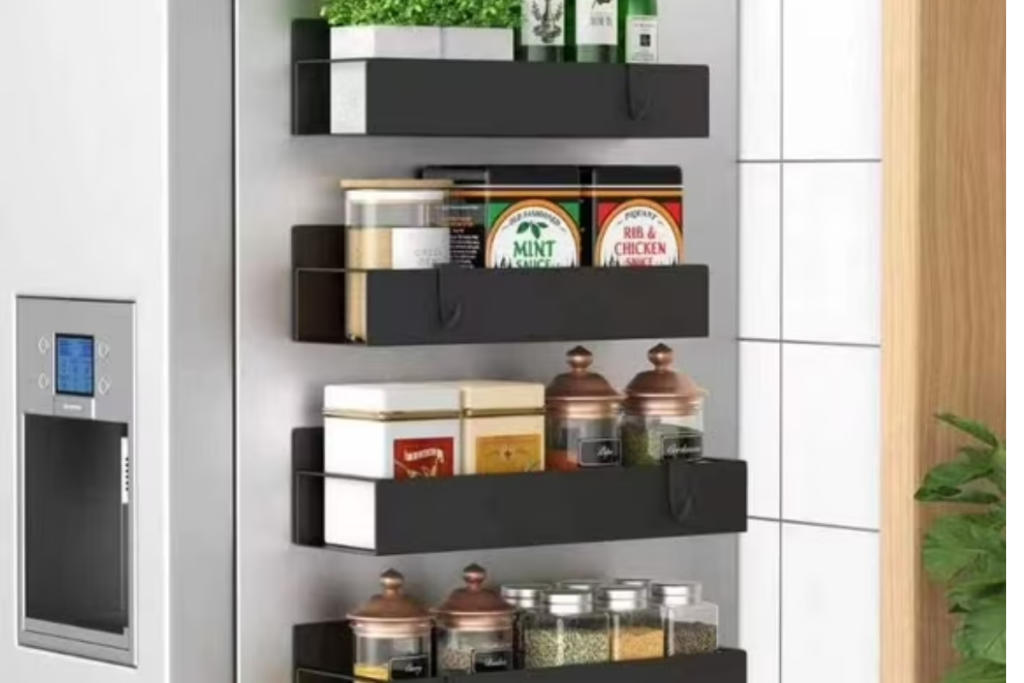
Here are all of our kitchen organization tips to help you organize your home with simple steps.