Medicine Cabinet Organization Tips
Medicine cabinet organization is crucial because the medicine cabinet is one of the most important storage spaces in the home—and often one of the most neglected.
Expired medications, half-used products, and items shoved wherever they fit can turn this small space into a source of stress instead of support.
Organizing your medicine cabinet isn’t about creating a perfectly styled shelf. It’s about safety, ease, and knowing exactly what you have when you need it most.
Let’s create a medicine cabinet organization system that feels clear, calm, and reliable.
Medicine Cabinet Organization: Start by Emptying Everything

Remove every item from the cabinet and place them on a flat surface.
This step allows you to:
- See duplicates you didn’t realize you had
- Check expiration dates
- Clean the cabinet thoroughly
Wipe shelves before returning anything.
Dispose of Expired and Unneeded Items Safely
Go through each item carefully.
Let go of:
- Expired medications
- Old prescriptions you no longer use
- Dried-up creams or products without labels
- Anything you can’t clearly identify
Many pharmacies offer medication take-back programs for safe disposal. Avoid flushing medications unless instructions specifically say it’s safe to do so.
Sort Into Clear, Supportive Categories
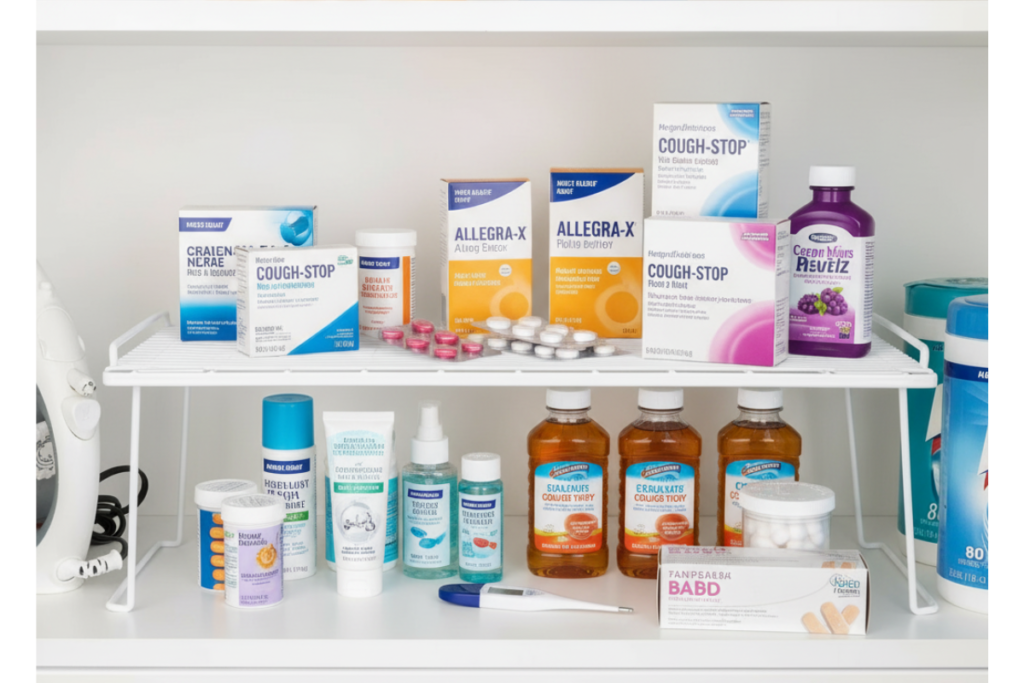
Grouping items makes them easier to find and safer to use.
Common categories include:
- Daily medications
- First aid supplies
- Cold, flu, and allergy items
- Pain relief
- Vitamins and supplements
- Topical treatments
If children use the cabinet, consider separating adult and child medications clearly.
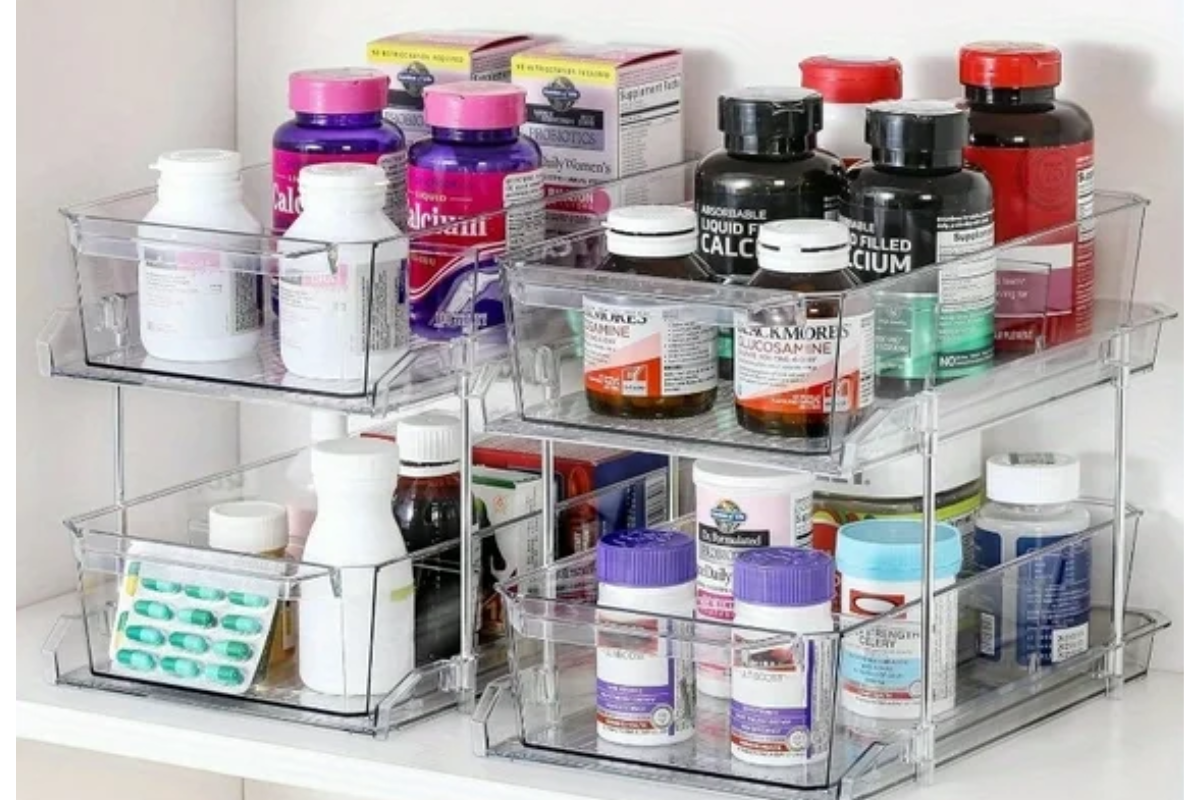
Choose Containers That Fit the Space
Small containers create order without crowding.
Helpful options include:
- Clear bins or trays
- Drawer organizers
- Small baskets with handles
Choose containers that allow you to lift out an entire category at once if needed.
Place Items by Frequency of Use
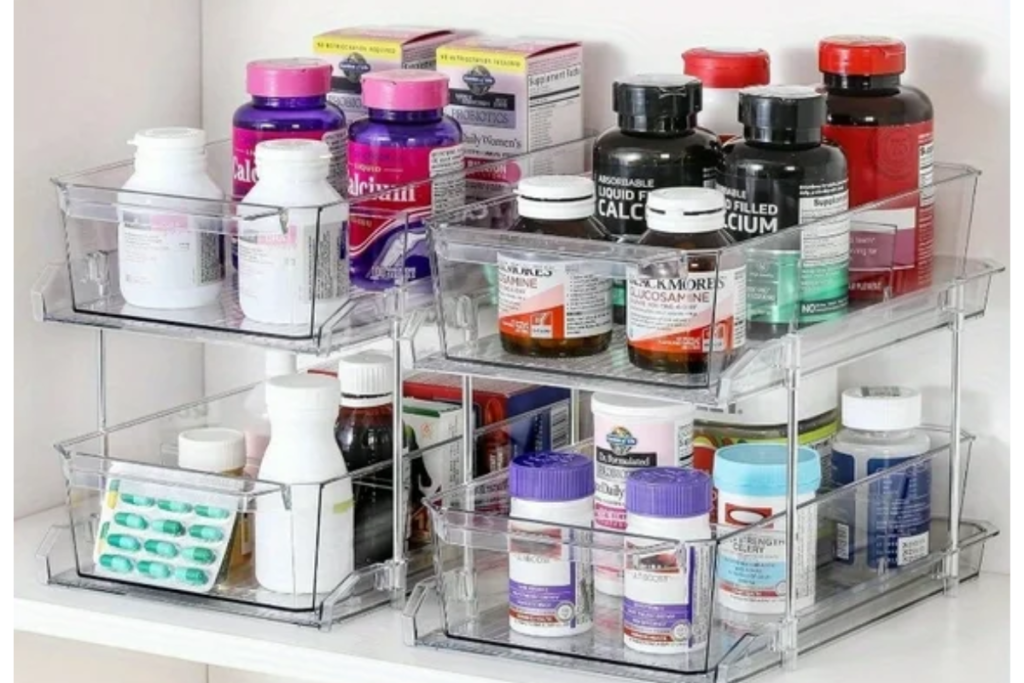
Think about what you reach for most often.
- Everyday medications should be front and center
- Occasional items can go higher or farther back
- Rarely used items should be clearly labeled
This reduces confusion during rushed or stressful moments.
Use Labels for Clarity and Safety
Labels aren’t just about aesthetics—they’re about confidence.
Label bins clearly, especially for:
- Children’s vs. adult medications
- First aid
- Emergency items
Clear labeling helps everyone in the household know where things belong.
Store Items Safely
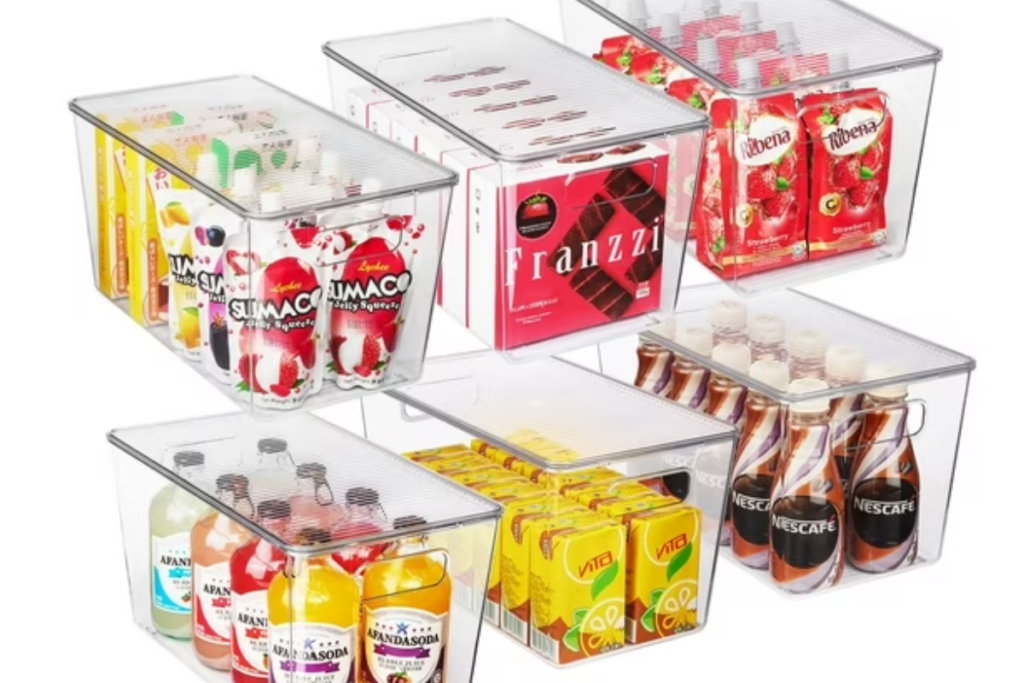
Keep safety in mind as you organize:
- Store medications out of reach of children
- Use childproof containers when needed
- Avoid storing medicine in areas exposed to heat or moisture
If your bathroom isn’t ideal for medication storage, consider relocating to a cool, dry cabinet elsewhere in the home.
Do a Regular Check-In
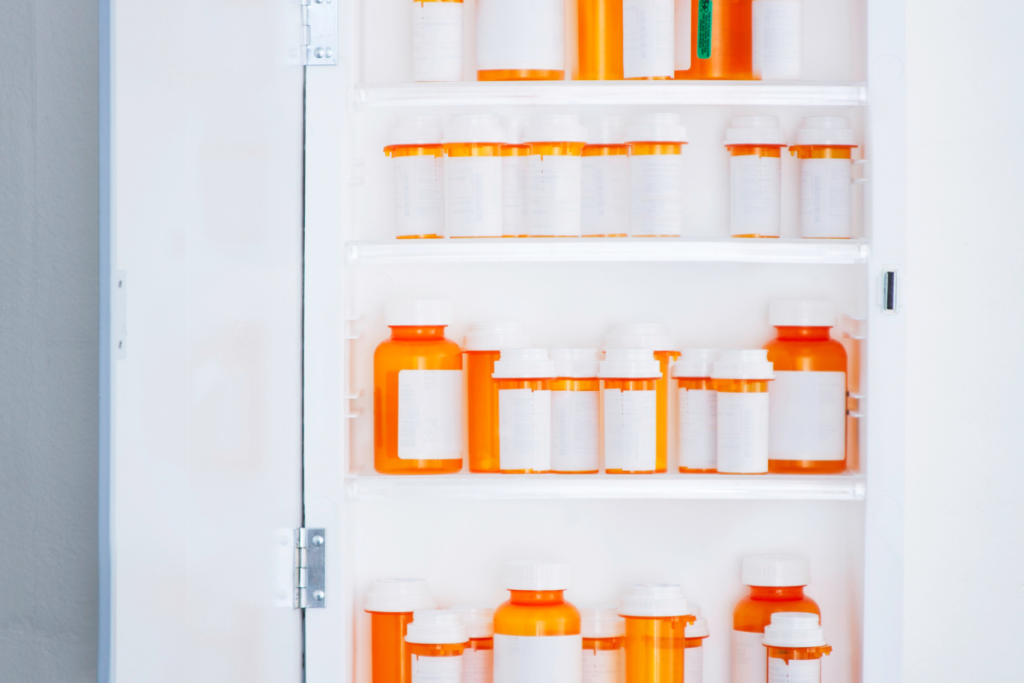
Set a reminder every 6 months to:
- Check expiration dates
- Wipe shelves
- Restock essentials
A quick reset keeps the cabinet dependable and stress-free.
A Final Thought
An organized medicine cabinet offers more than order—it offers peace of mind. When everything has a clear place, you can respond calmly and confidently when someone needs care.
This small space plays a big role in supporting your household. A few thoughtful systems go a long way.
While you are organizing, tackle your bathroom organization with these simple tips.