Pantry Organization Tips
Pantry organization is crucial to your life because there’s something about opening an overstuffed pantry that can instantly drain your energy. Bags falling over. Half-used boxes hiding behind newer ones. Items you know you bought… but can’t seem to find.
If your pantry has felt more stressful than supportive, this is your gentle reminder: pantry organization isn’t about having a perfectly styled space. It’s about creating a pantry that works with your life, not against it.
Let’s approach this slowly, simply, and with kindness to yourself.
Pantry Organization Step 1: Clean The Space
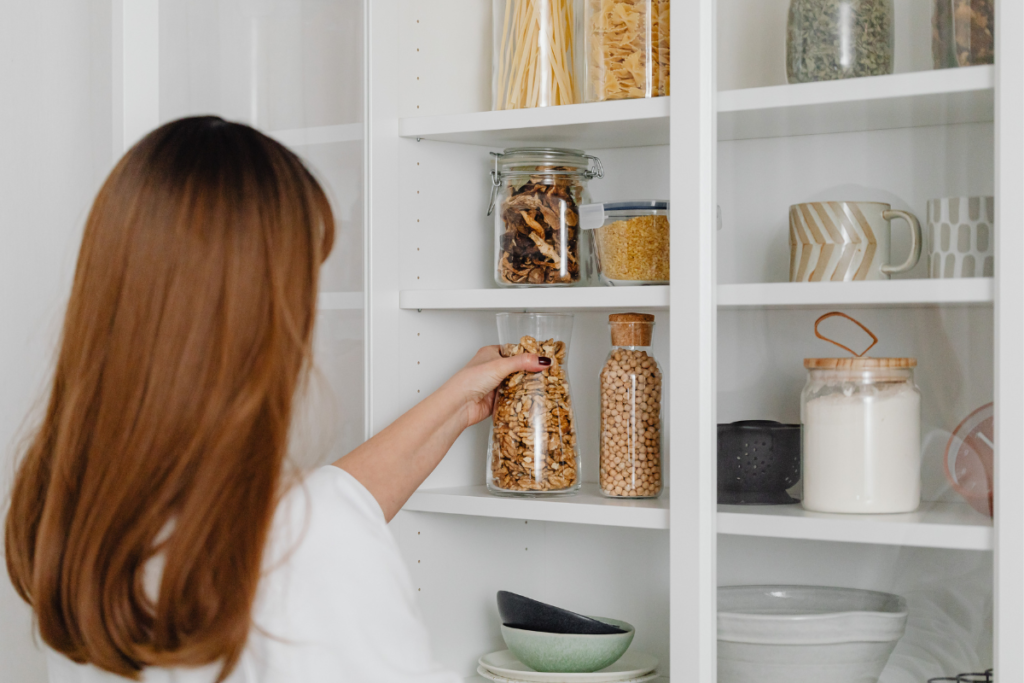
You don’t need to empty the entire pantry all at once—unless that feels good to you. Even one shelf is enough to begin.
As you take items out, place them into easy categories:
- Keep and use
- Donate (unopened, unexpired items)
- Toss (expired or no longer safe)
Just a reminder, this isn’t about guilt or waste. It’s about creating space for what truly serves your family right now.
Group Similar Items Together
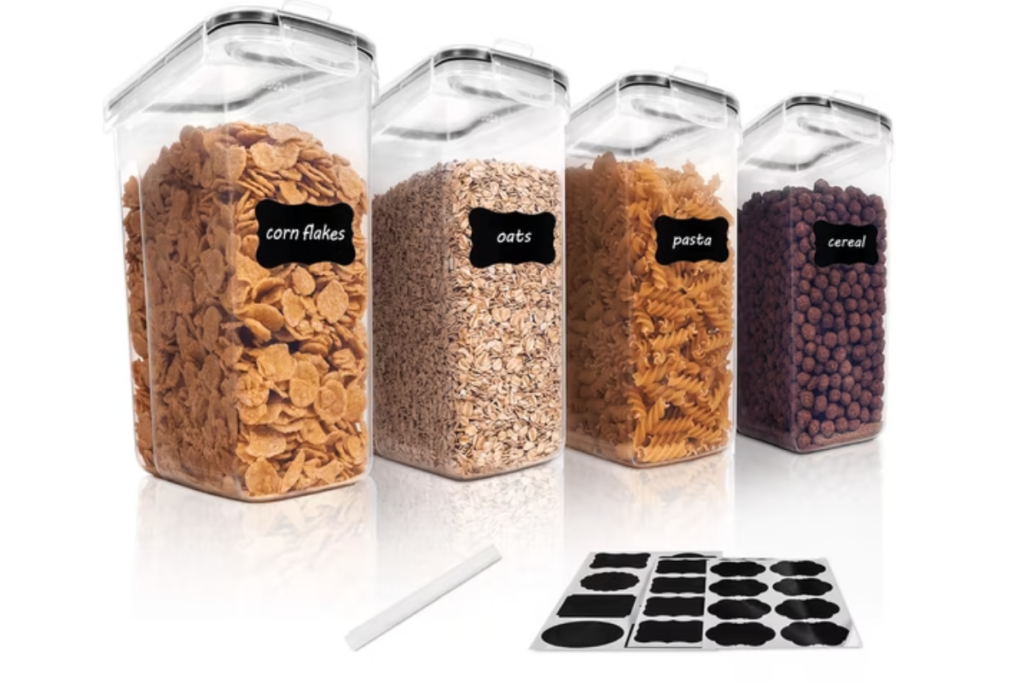
Pantries feel calmer when like items live together. This helps you see what you have and avoid buying duplicates.
Simple groupings might include:
- Baking supplies
- Snacks
- Breakfast items
- Canned goods
- Grains and pasta
- Spices and oils
You don’t need a category for everything—just enough to bring clarity.
Choose Containers That Support Ease
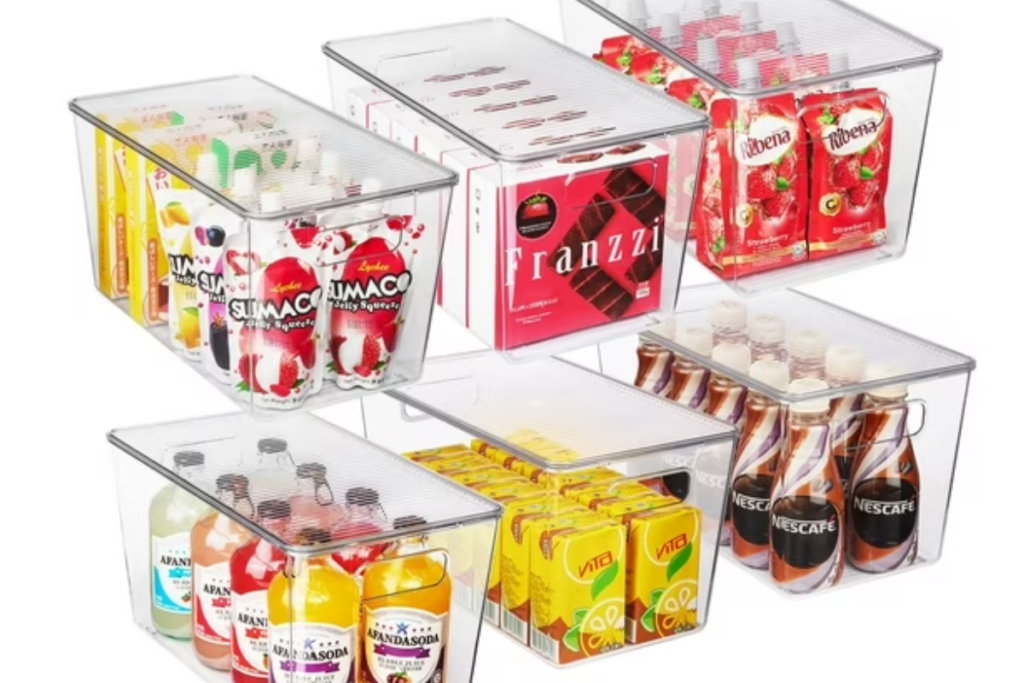
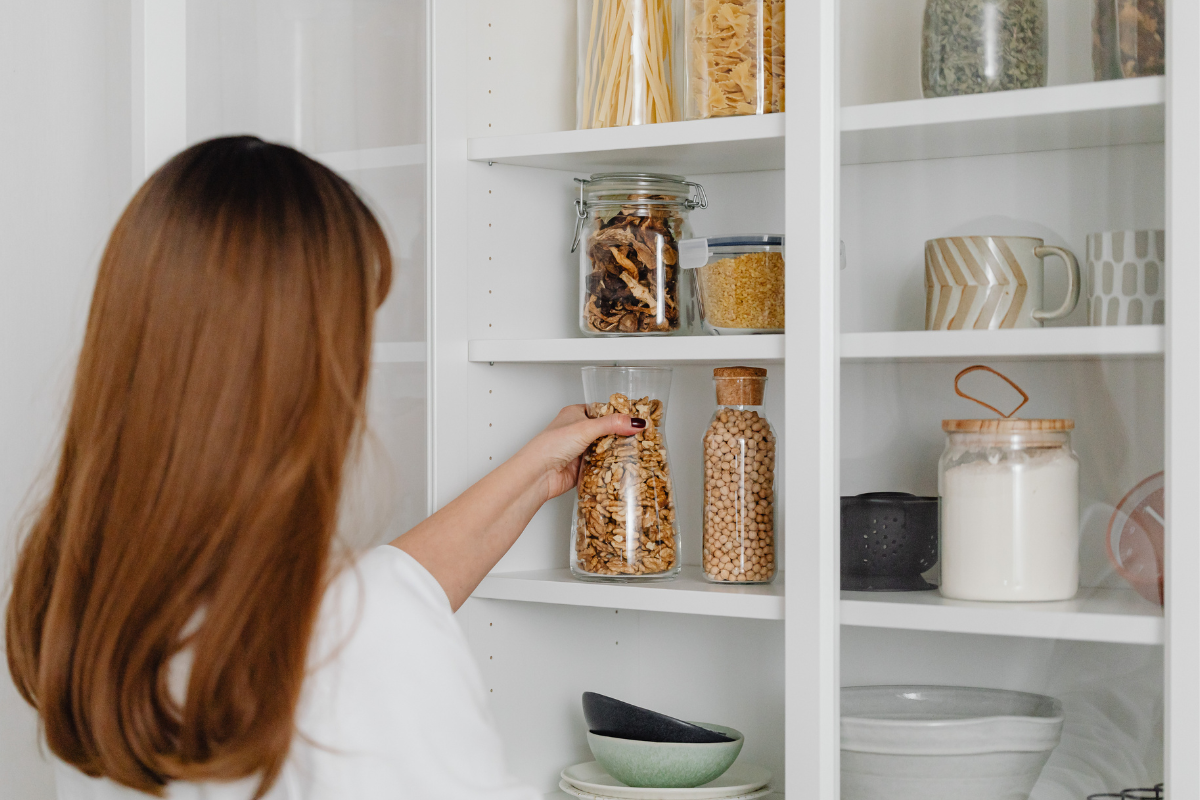
Containers are tools, not rules. Use what you already have, and add more only if they truly help.
Helpful options:
- Clear bins so you can see contents at a glance
- Baskets for snacks or grab-and-go items
- Airtight containers for flour, sugar, rice, and cereal
The goal is visibility and access—not uniform perfection.
Create Gentle Pantry Zones
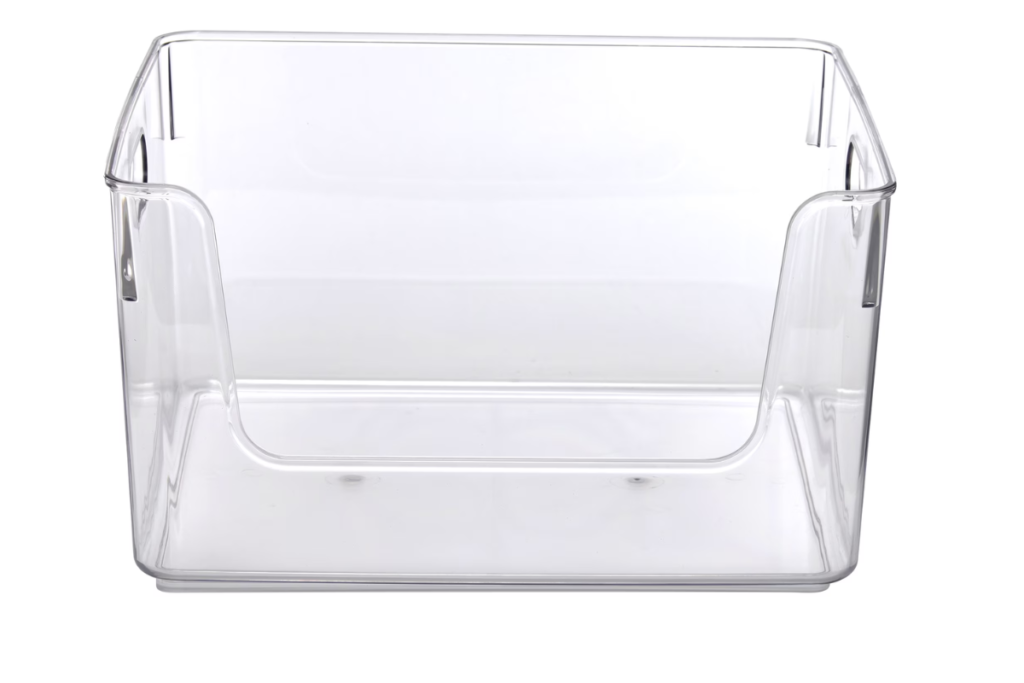
Think of your pantry in zones based on how your family uses it.
- Eye-level shelves: everyday foods and snacks
- Lower shelves: kid-friendly items or heavier goods
- Upper shelves: backstock, special ingredients, or rarely used items
When the most-used foods are easiest to reach, daily life feels smoother.
Labels Bring Clarity, Not Pressure
Labels can be simple and flexible. A piece of masking tape and a pen work just as well as printed labels.
Label bins or containers with categories like:
- Snacks
- Baking
- Breakfast
- Pasta
- Backstock
Clear labels help everyone in the household know where things belong—and where to put them back.
Make Room for Real Life
A functional pantry leaves room for change. Snacks rotate. Preferences shift. Life gets busy.
Try:
- Leaving a little open space on each shelf
- Keeping a small “use soon” bin for open packages
- Having one flexible bin for overflow or seasonal items
An organized pantry should bend with your life, not demand constant upkeep.
Maintain the Pantry in Small Moments
Maintenance doesn’t have to be a big project.
Consider, for your pantry organization, once a week or every other week:
- Do a quick visual scan
- Toss expired items
- Straighten bins as needed
Even five minutes can restore calm.
Pantry Organization Products
Here are a few of our favorite pantry organization products.
Under Shelf Organizer
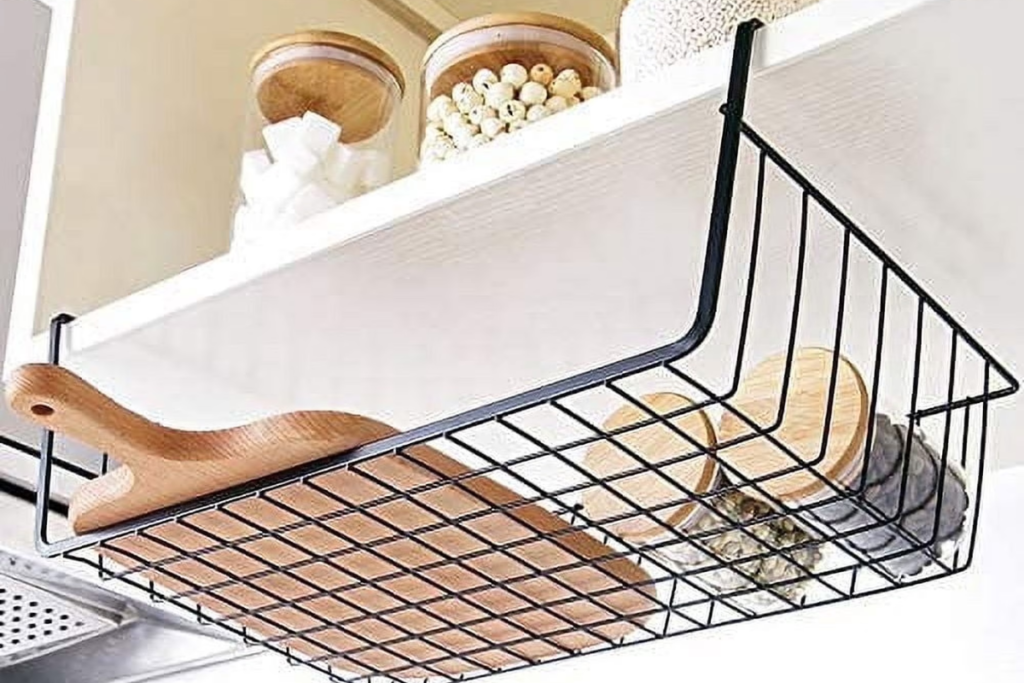
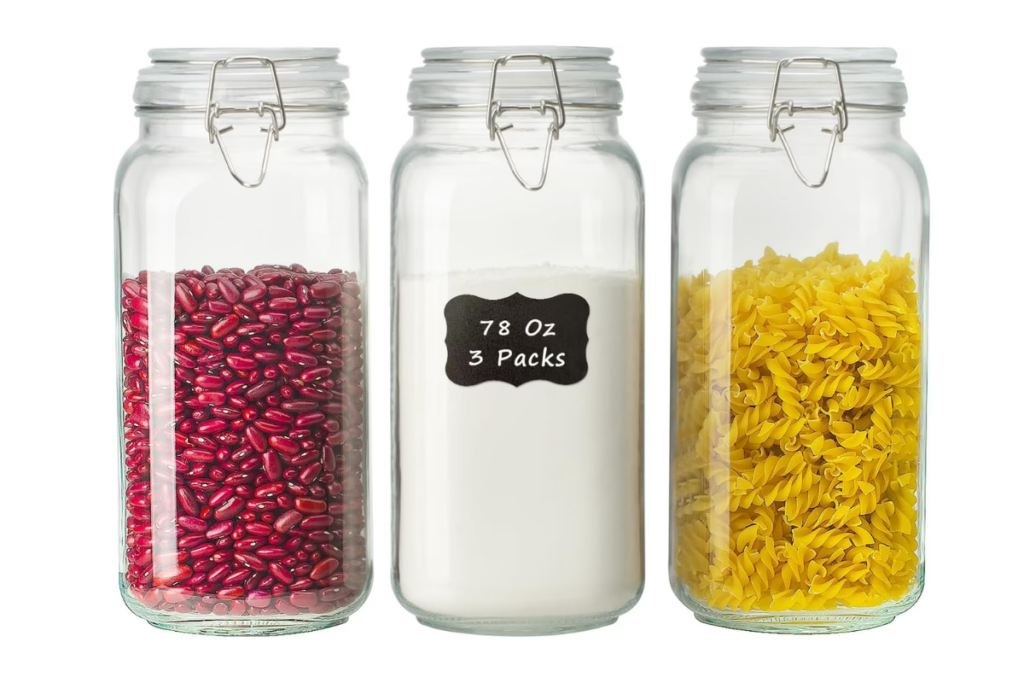
Glass Storage Jars
A Gentle Reminder Before You Close the Door
Your pantry doesn’t need to look like a magazine spread. It just needs to support you in feeding your family with less stress and more ease.
Pantry Organization is not about control—it’s about care. Care for your time, your energy, and the rhythms of your home.
Start small. Keep it simple. And trust that every small step you take toward calm is enough.
All Kitchen Organization Tips