Utensil Drawer Organization
Utensil drawer organization is essential for every kitchen. The utensil drawer is one of the most-used spaces in the kitchen—and often one of the most frustrating. When forks tangle with spatulas and you have to dig for a can opener, even simple meals can feel harder than they need to be. That is a good reason to do some easy utensil drawer organization.
The good news? Utensil Drawer organization doesn’t require a full kitchen overhaul. With a little intention and a gentle reset, this small space can become calm, functional, and easy to maintain.
Let’s walk through it step by step.
Utensil Drawer Organization Step 1
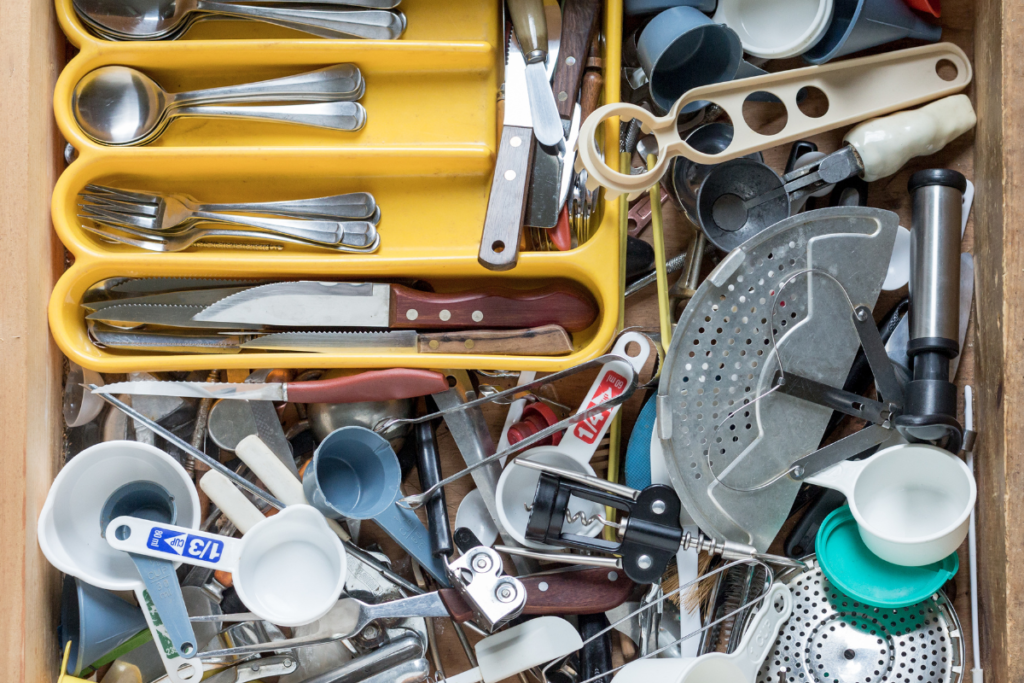
Before you work on your utensil drawer organization, empty the entire drawer. Yes—everything.
This step matters more than it seems. It allows you to:
- See how many utensils you actually own
- Wipe away crumbs and dust
- Reset the space without working around clutter
As you remove items, place them in loose categories (silverware, cooking tools, gadgets, miscellaneous).
Declutter With Purpose (Not Perfection)
Ask yourself a few simple questions as you sort:
- Do I use this regularly?
- Do I own duplicates without realizing it?
- Is this broken, bent, or frustrating to use?
You don’t need to get rid of everything extra—just the items that consistently get in your way. A drawer works best when every utensil earns its spot.
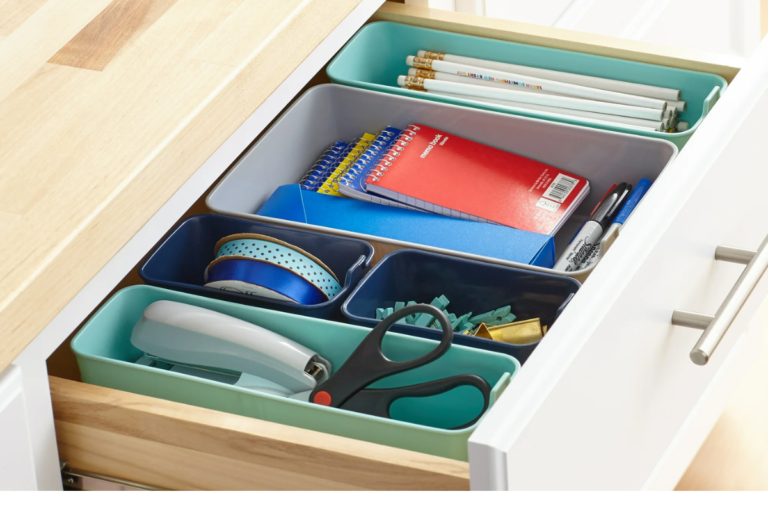
Choose the Right Organizer for Your Drawer
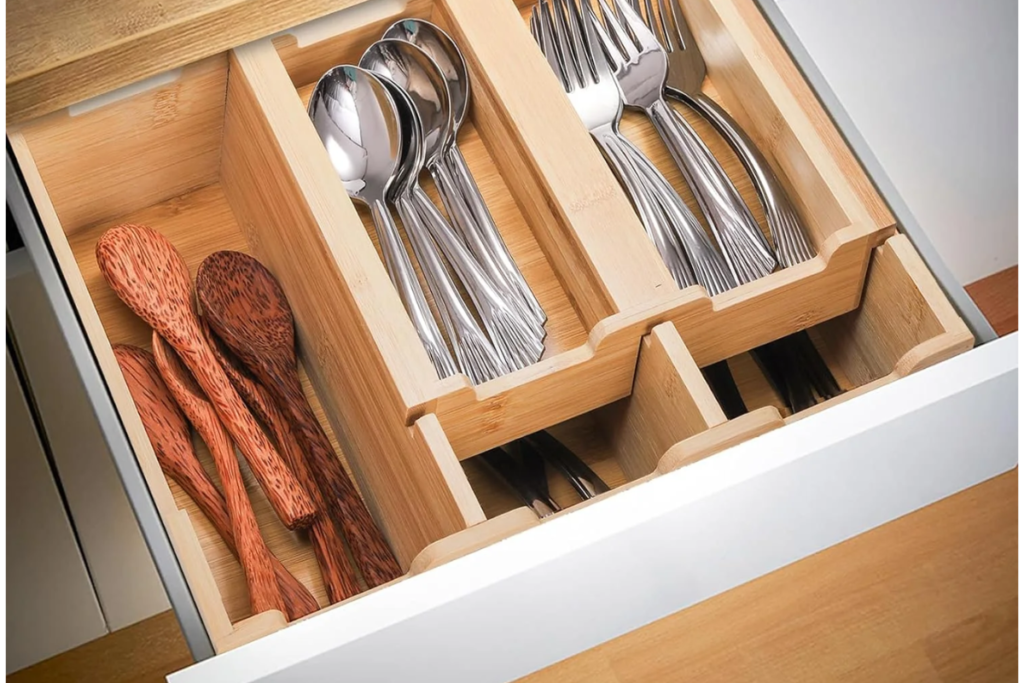
Not all utensil drawers are created equal, so avoid forcing a one-size-fits-all solution.
Look for organizers that:
- Fit the exact width and depth of your drawer
- Offer adjustable compartments if possible
- Have enough sections to prevent overcrowding
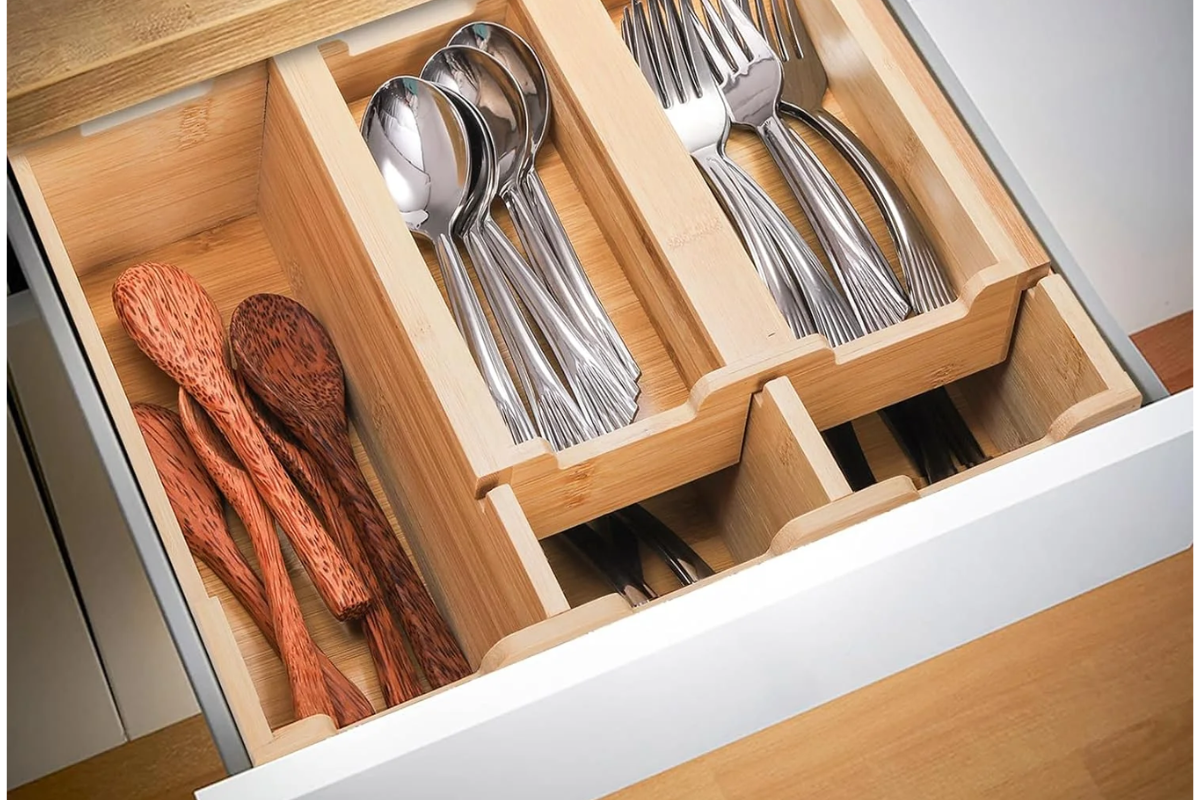
Expandable trays, bamboo inserts, or modular bins all work beautifully depending on your space.
Group by Use, Not Just Type
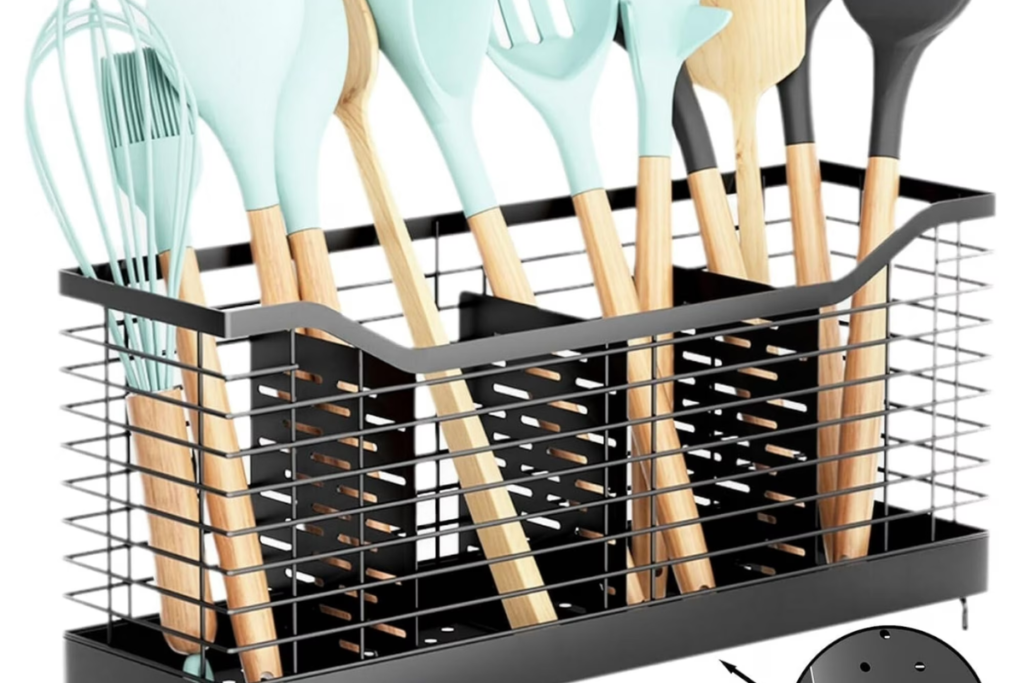
Instead of organizing only by utensil category, think about how you cook.
For example:
- Everyday silverware front and center
- Cooking tools (spatulas, spoons, tongs) together
- Specialty tools (zesters, peelers, thermometers) off to the side
Keeping frequently used items closest to where your hand naturally reaches makes daily cooking smoother and faster.
Lay Items Flat and Face the Same Direction
Utensils stack best when they’re all oriented the same way. This small detail:
- Prevents tangling
- Makes items easier to grab
- Keeps the drawer closing smoothly
If something is too tall to lie flat, it may belong in a countertop crock or a different drawer altogether.
Create a “Buffer Zone” for the Random Stuff
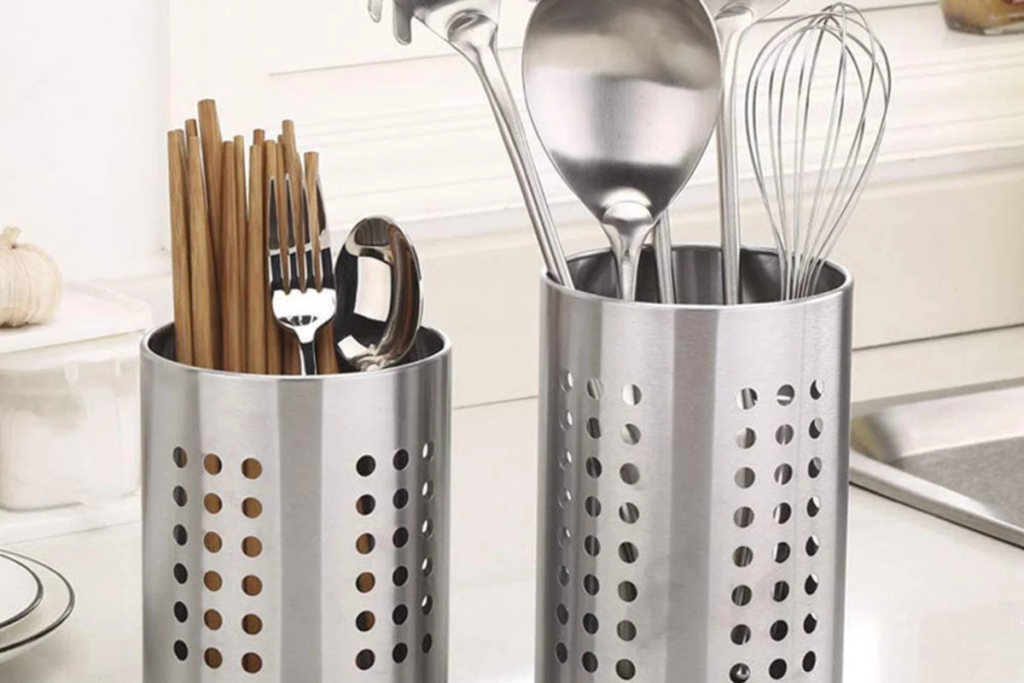
Every kitchen has a few odd utensils that don’t fit neatly anywhere. Instead of letting them float around the drawer, assign a small section just for them.
This keeps the rest of the drawer tidy while still honoring real-life use.
Maintain With a Monthly Micro-Reset
Utensil drawers don’t need constant attention. Once a month (or even once a season), take 2 minutes to:
- Realign utensils
- Remove crumbs
- Return stray items to their sections
Small resets prevent clutter from quietly creeping back in.
A Final Thought
An organized utensil drawer isn’t about aesthetics—it’s about ease. When the tools you need are easy to find, cooking feels lighter, calmer, and more enjoyable.
Sometimes the smallest spaces create the biggest sense of relief.
If you’re slowly organizing your home, let this drawer be a gentle win. One calm space at a time is more than enough.
All Kitchen Organization Tips